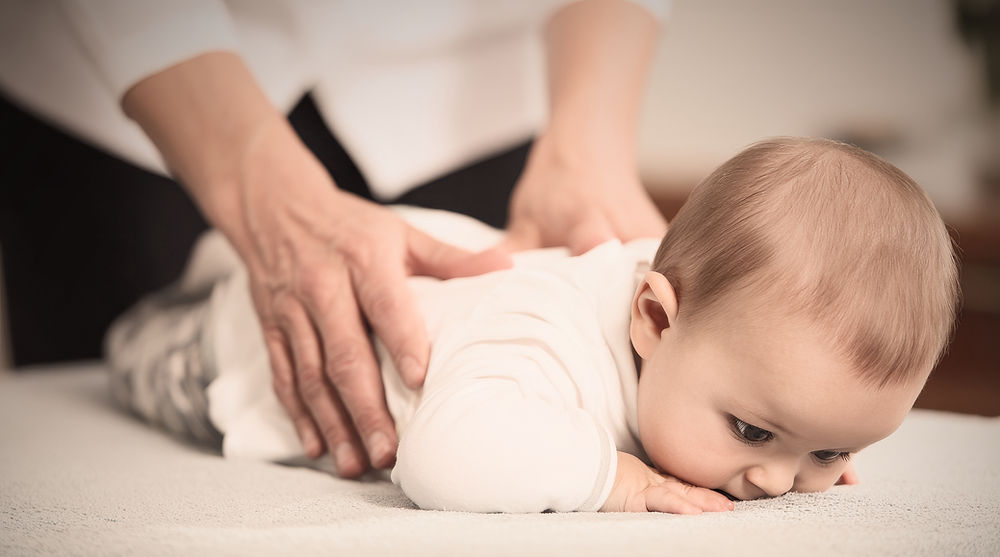
When people think about physical therapy, they usually think about muscles and movement, not digestion. But in my work, I see the connection between GI issues in babies and motor development play out consistently, and it's one of the most under-discussed pieces of early development. Reflux and constipation aren't just uncomfortable in the moment. They quietly shape how a baby moves, positions their body, and builds the foundational strength they'll need for rolling, sitting, crawling, and walking.
Here's why. Babies with reflux often feel pain or burning when they're lying flat, especially on their back or belly, so they naturally avoid the very positions that build early strength. Tummy time is a perfect example: it's one of the most important activities for building neck, shoulder, and core strength in the first few months, but a baby with reflux may cry, arch, or refuse it altogether because lying on their tummy increases discomfort. Over time, that avoidance adds up. Less tummy time means less practice pushing up, less neck and trunk strength, and often a slower path to milestones like rolling and sitting independently. Babies may also develop a preference for being held upright or in a curled, guarded position, which can contribute to muscle tightness or asymmetries, including patterns that look like torticollis.
Constipation tells a similar story from a different angle. Babies who are straining, uncomfortable, or dealing with irregular or difficult bowel movements often avoid using their tummy muscles as this causes more pain. I also see constipated babies who arch, tuck their legs, or resist positions that put any pressure on their belly, all of which limits the variety of movement experiences that typically build strength and body awareness in the first year. When a baby spends more time guarding and avoiding than they do exploring and moving freely, motor milestones can start to lag, not because anything is structurally wrong, but because the opportunity to practice hasn't been there.
This is exactly why a GI issue in infancy is a legitimate reason to bring in a pediatric physical therapist, even if it doesn't feel like a ‘PT problem’ on the surface. In an evaluation, I'm looking at the whole picture: how your baby tolerates different positions, whether there's asymmetry or tightness that's developed from guarding, how their core and postural muscles are activating, and whether feeding or digestive discomfort is limiting their movement opportunities. From there, we can build a plan that might include modified tummy time positions that are more comfortable, gentle bodywork to release tension from guarding, and activities that rebuild the strength and confidence a baby may have missed out on while they were focused on just getting comfortable. I also coordinate closely with pediatricians, GI specialists, and lactation consultants, because addressing the digestive piece and the motor piece together tends to get babies back on track faster than treating either one alone.
If your baby has ongoing reflux or constipation and you're also noticing they're behind on rolling, sitting, or tolerating tummy time, or if they seem to consistently avoid certain positions, it's worth considering a pediatric PT. The earlier we can identify these patterns, the more we can support your baby's comfort and their motor development at the same time, rather than waiting to see if one problem resolves before addressing the other.